
HRV Shows the Signal.
ANS Monitoring Reveals the Source.
Heart Rate Variability has transformed the way clinicians evaluate autonomic health. But when patients have complex symptoms, one number often isn't enough.
Learn how comprehensive Autonomic Nervous System monitoring provides a deeper understanding of sympathetic and parasympathetic function—and why this distinction matters.
HRV vs ANS Monitoring
Two Valuable Tools.
Different Levels of Information.
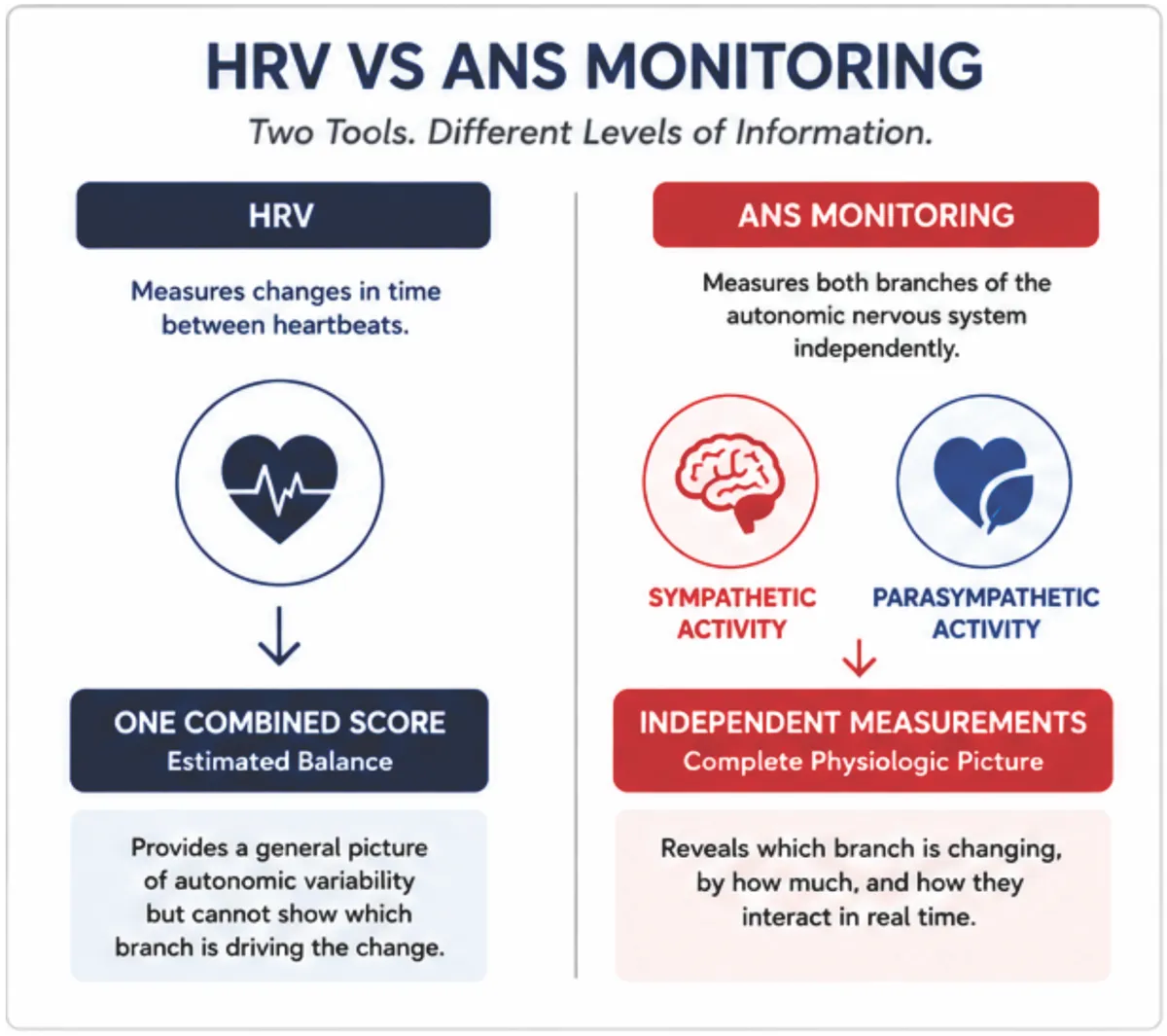
Heart Rate Variability and Autonomic Nervous System monitoring both evaluate autonomic function, but they answer different clinical questions.
HRV measures changes in the timing between heartbeats and summarizes autonomic activity into a single value or group of derived metrics.
ANS monitoring evaluates the activity of both branches of the autonomic nervous system independently, allowing clinicians to understand not only whether autonomic dysfunction exists, but which branch is responsible.
What HRV Does Well
HRV has become one of the most widely used physiologic measurements
For many healthy individuals, HRV offers an excellent way to observe overall autonomic trends.
It provides valuable information regarding:
Recovery
Athletic readiness
Stress trends
Wellness monitoring
Population research
Longitudinal tracking
Where HRV Has Limitations
When symptoms become more complex, interpretation becomes more difficult.
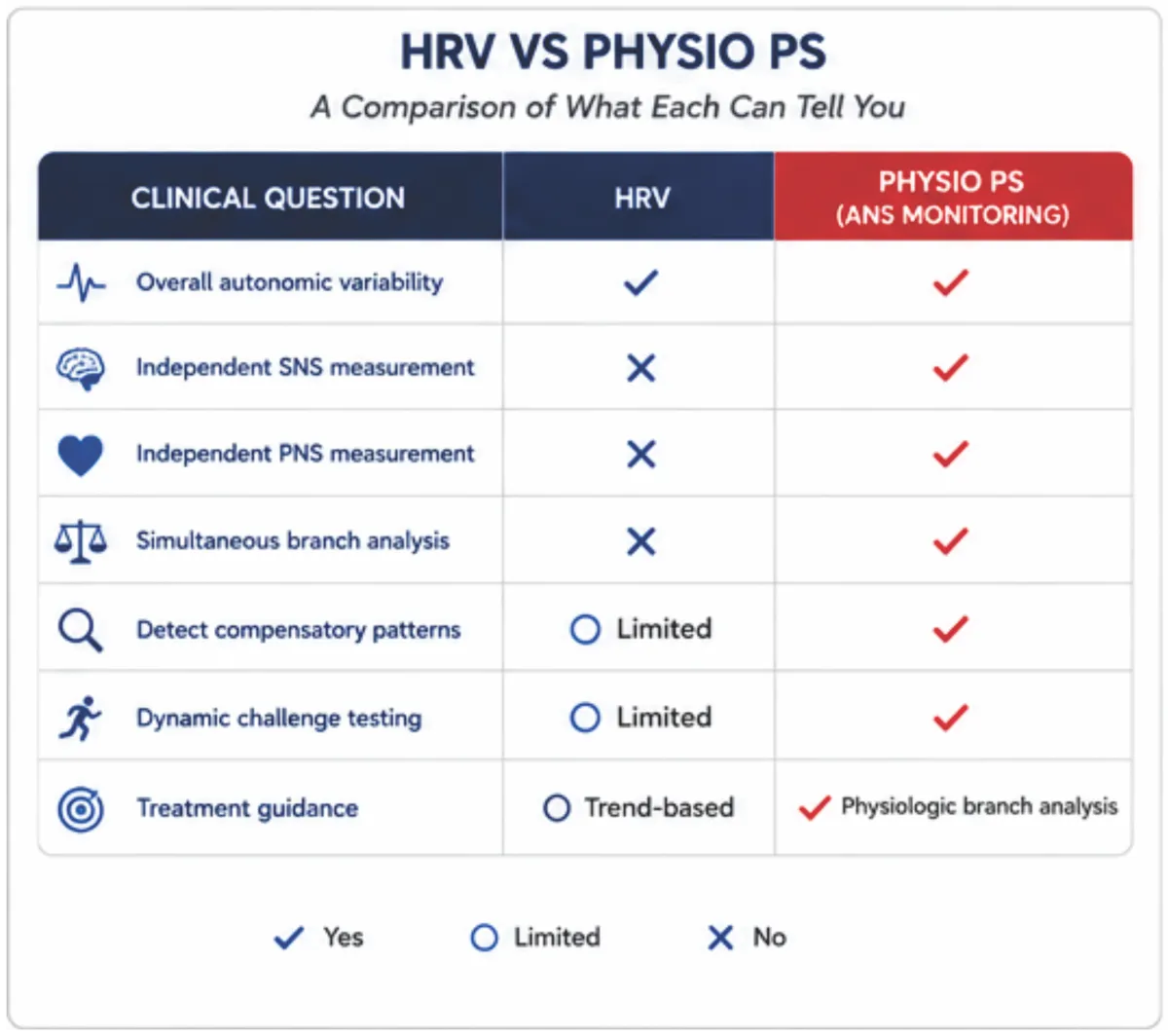
HRV combines sympathetic and parasympathetic influences into a single measurement. Because of this, it cannot independently determine which branch is changing or whether sympathetic activation is primary or compensatory.
Why One Number Can Be Misleading
Imagine driving a car.
The accelerator represents the sympathetic nervous system.
The brakes represent the parasympathetic nervous system.
If the brakes begin dragging, the driver must press harder on the accelerator simply to maintain speed.
From the outside, it appears the accelerator is the problem.
In reality, the brakes created the issue.
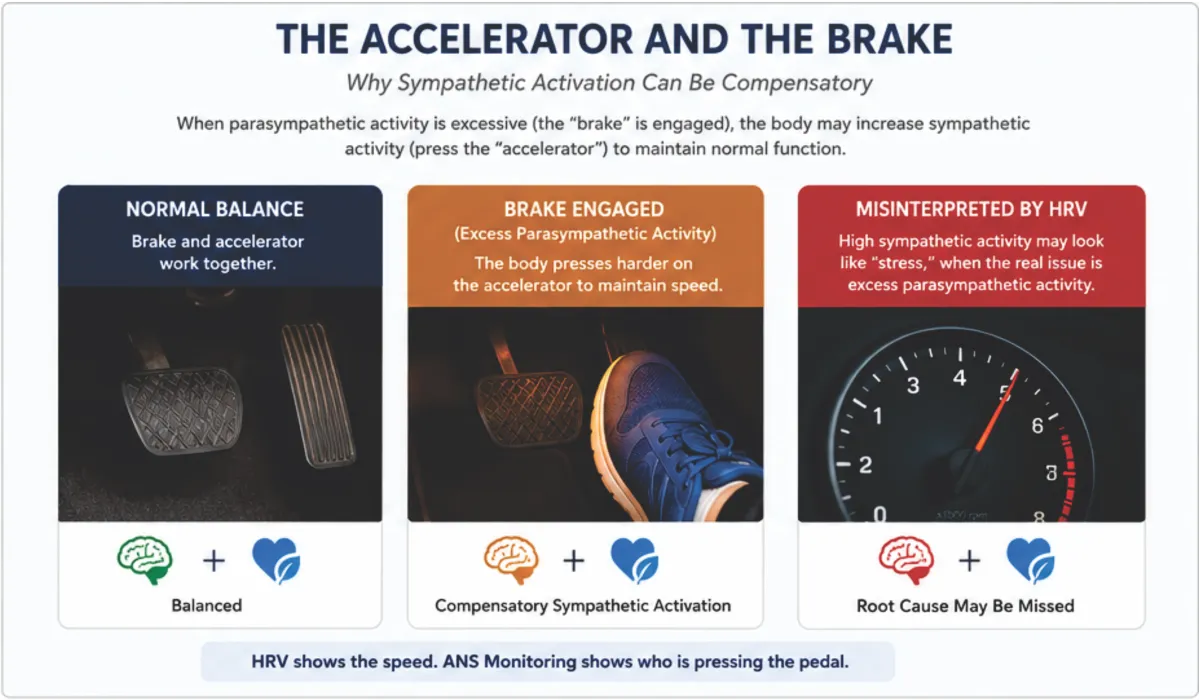
We use this analogy to explain how compensatory sympathetic activation may occur when excessive parasympathetic activity is present, a distinction that may not be evident from HRV alone.
What Makes Physio PS Different?
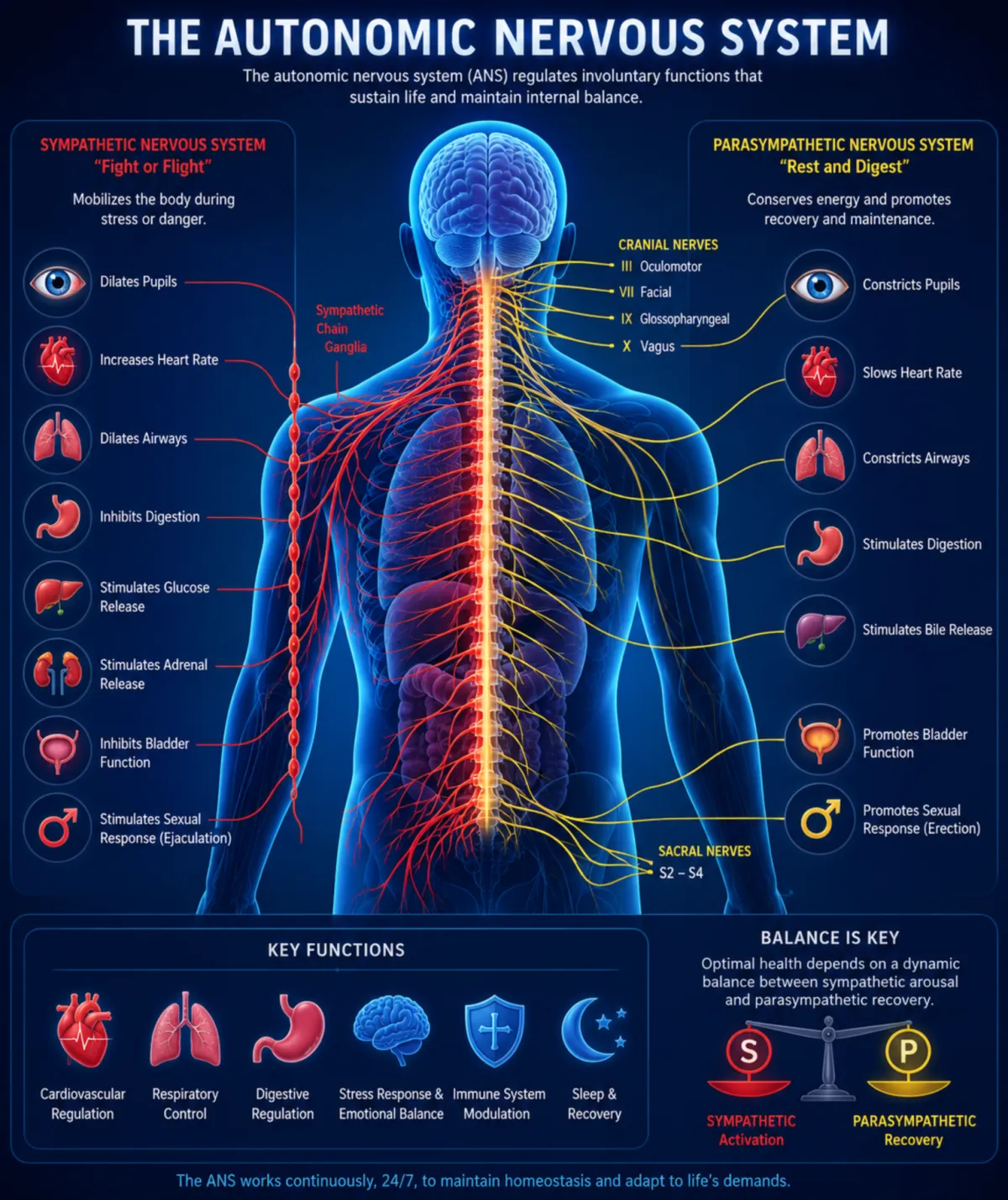
Physio PS was developed to measure the autonomic nervous system directly—not simply estimate autonomic balance.
Instead of combining physiologic activity into a single value, Physio PS independently measures:
Sympathetic Activity
The body's accelerator.
Responsible for:
Blood Pressure Regulation
Fight-or-Flight Response
Energy Mobilization
Circulation
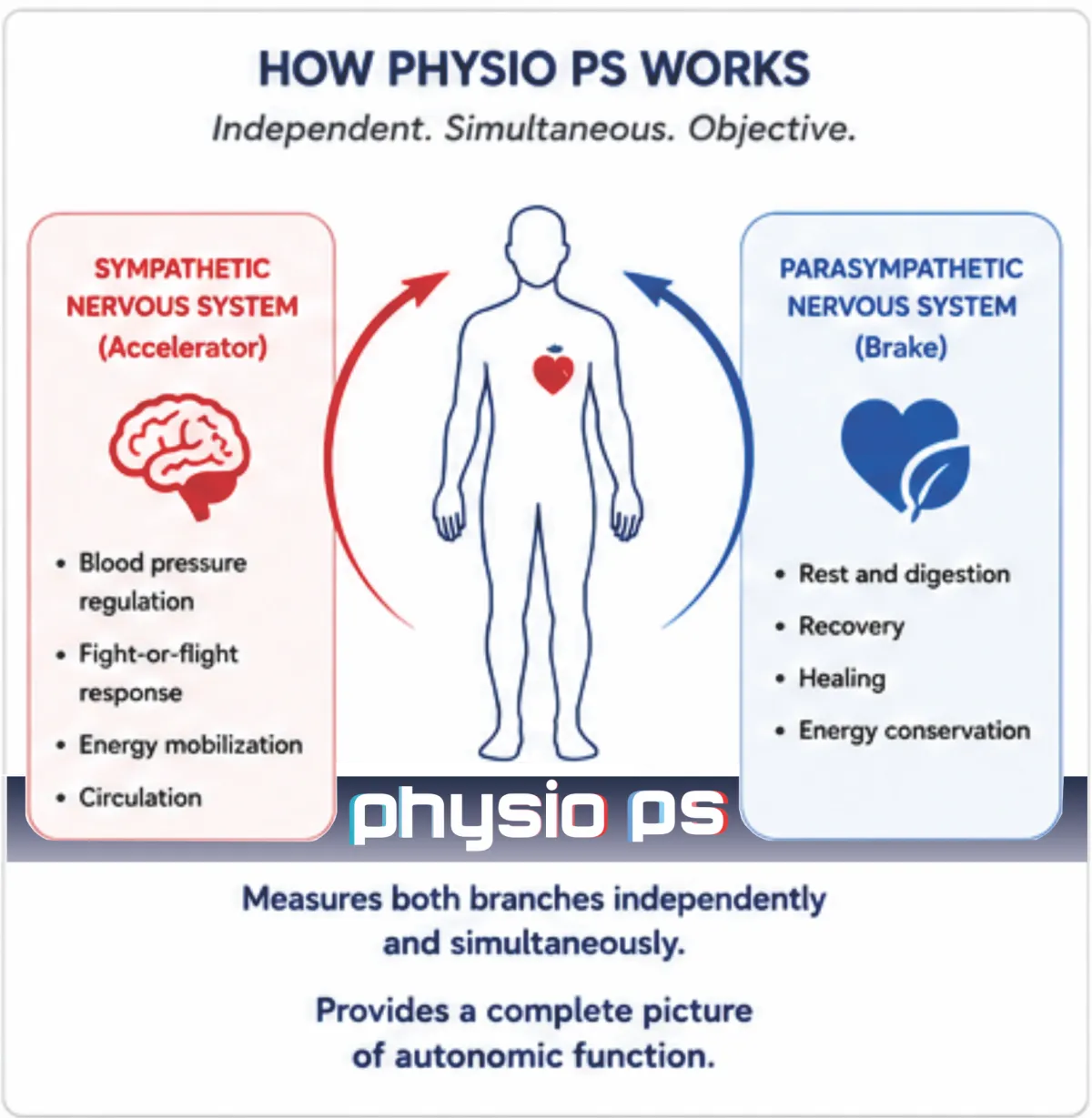
Parasympathetic Activity
The body's recovery system.
Responsible for:
Rest & Digestion
Recovery
Healing
Energy Conservation
Together
Physio PS evaluates both systems simultaneously, providing clinicians with separate measurements rather than a single combined score.
Why This Matters Clinically
Understanding which branch of the autonomic nervous system is changing may help clinicians:
Better understand complex symptom patterns
Individualize treatment plans
Monitor physiologic responses over time
Assess changes before and after intervention
Evaluate autonomic responses during physiologic challenges
Methods capable of measuring sympathetic and parasympathetic activity independently and under challenge conditions may better characterize complex autonomic dysfunction than resting HRV alone.
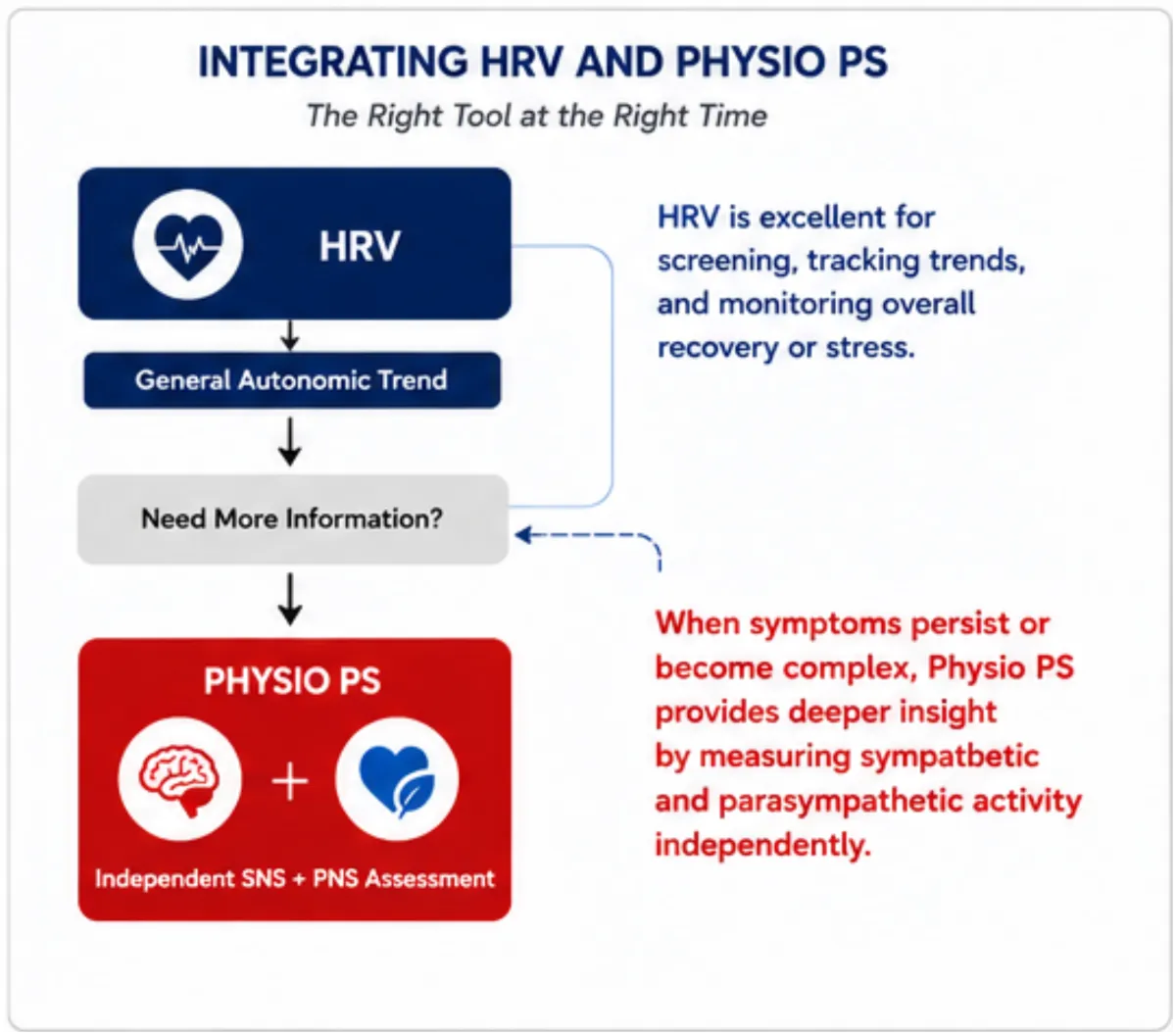
HRV and Physio PS Work Together
This isn't about replacing HRV.
It's about knowing when additional information is needed.
HRV remains a valuable screening and monitoring tool.
When patients present with persistent symptoms, unexplained autonomic complaints, or complex clinical presentations, independent autonomic assessment may provide additional insight.
Common Conditions Where ANS Monitoring May Be Helpful
Long COVID
POTS
Syncope
Chronic Fatigue
Fibromyalgia
Neuropathy
Diabetes
Persistent Dizziness
Migraines
PTSD
Traumatic Brain Injury
Complex Chronic Pain
Medication Monitoring
Exercise Intolerance
Why Clinicians Choose Physio PS
15-minute Non-Invasive Assessment
Simple workflow.
No imaging.
No radiation.
Easy to repeat.
Independent Sympathetic Measurement
Not estimated. Measured.
Independent Pympathetic Measurement
Allows branch-specific interpretation.
Objective Reporting
Supports longitudinal patient monitoring.
Dynamic Physiologic Testing
Evaluates autonomic responses beyond resting measurements.
Is HRV inaccurate?
No.
HRV is a well-established and valuable tool for monitoring overall autonomic variability. Its usefulness depends on the clinical question being asked. For complex autonomic dysfunction, additional physiologic information may be beneficial.
Does Physio PS replace HRV?
No.
Physio PS complements HRV by providing independent measurements of sympathetic and parasympathetic activity, giving clinicians additional physiologic information.
Why measure both branches separately?
Because similar HRV values can arise from different combinations of sympathetic and parasympathetic activity, measuring the branches independently may provide greater clinical context.Describe the item or answer the question so that site visitors who are interested get more information. You can emphasize this text with bullets, italics or bold, and add links.
Is Physio PS invasive?
No.
Testing is non-invasive and typically completed in approximately 15 minutes.
See Beyond HRV
Understand the autonomic nervous system with independent measurements of sympathetic and parasympathetic activity.
Our Trusted Research Partners












Testimonials
Sean O. Flannagan, PT, DPT, Cert. SMT, Cert. DN, MAACP
"Physio PS has been a gamechanger in uncovering the hidden autonomic dysfunctions that often underlie chronic fatigue, persistent pain, anxiety symptoms, and delayed recovery after whiplash and concussion. It’s given us answers when nothing else could — and a clear path to true healing."

Heather Bloom, MD, FACC, Director of Cardiac Electrophysiology, Atlanta VAMC Associate Professor, Emory University School of Medicine
"As a VA Electrophysiologist, I’ve used ANSAR’s Parasympathetic and Sympathetic Monitoring for years with outstanding results. It delivers diagnostic insights no other tool can provide. One case—a Navy SEAL suffering from severe dizziness and disability—was accurately diagnosed and effectively treated using ANSAR technology, after traditional tests failed. The patient regained his health, quality of life, and independence. This tool is a game-changer for patient care and healthcare efficiency."
Michael Stopyra, Patient
"I cannot say enough good things about Physio PS! This technology has done so much for me. I used to have terrible anxiety storms that would cause me to have high fevers. With this simple test, my doctor was able to find the root cause of my symptoms and prescribe a very low-dose medicine for about nine months to correct the primary problem. I have not had a high fever in four years!"

Copyright 2026. Physio PS, Inc.. All Rights Reserved.
The material and information provided by Physio PS is for general information purposes only. You should not rely upon this material or information for basis of making healthcare, treatment, or diagnosis decisions. While Physio PS strives to provide the most correct and up-to-date information and data, Physio PS makes no representations or warranties of any kind, expressed or implied, about the completeness, accuracy, reliability, suitability, or availability with respect to the information, products, services, or related graphics contained. Any reliance placed on such material is therefore strictly at your own risk. * ‘RFa’ is known to be a measure of Parasympathetic activity and ‘LFa’ is known to be a measure of Sympathetic activity, based on reference: Colombo J, Arora RR, DePace NL, Vinik AI, Clinical Autonomic Dysfunction: Measurement, Indications, Therapies, and Outcomes. Springer Science + Business Media, New York, NY; 2014.

603-287-1817